
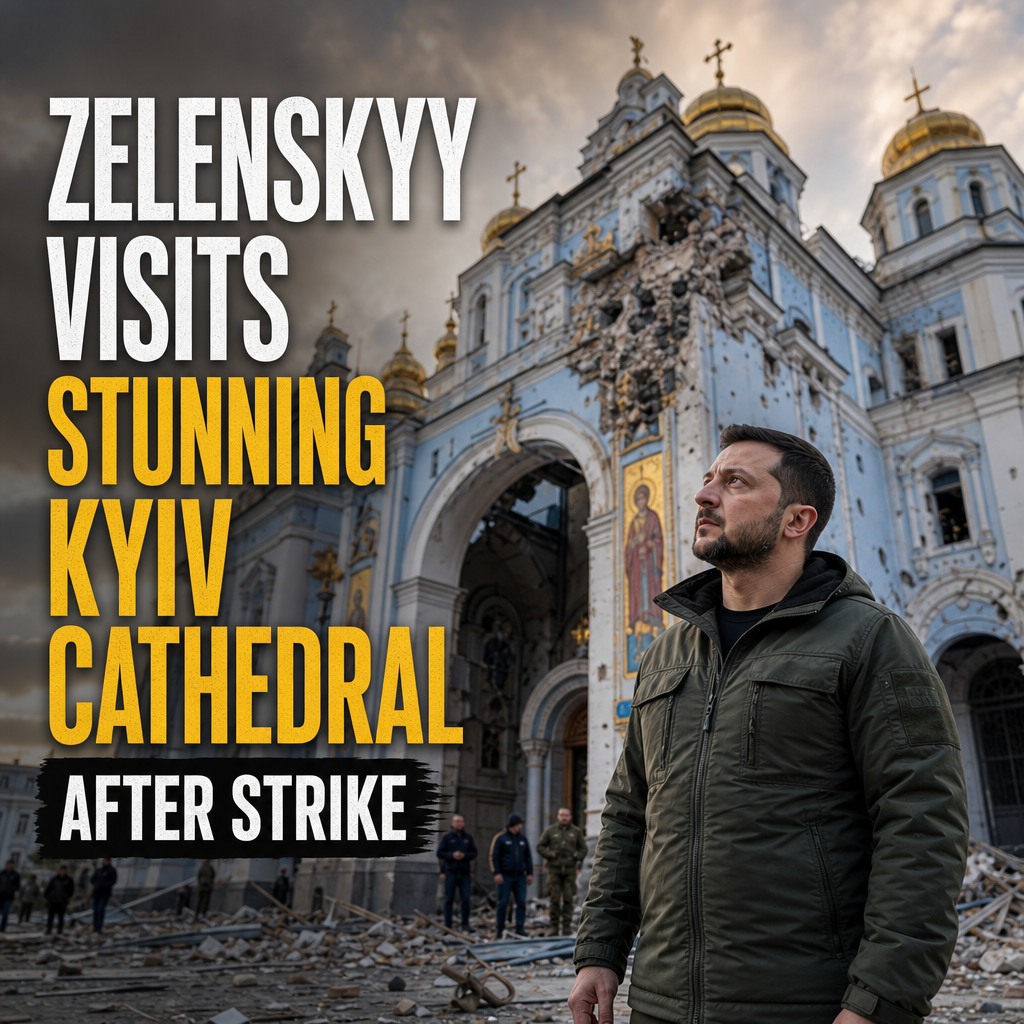
Zelenskyy Visits Stunning Kyiv Cathedral After Strike


Zelenskyy visits Kyiv cathedral at a moment that feels both deeply symbolic and painfully practical: a historic place of worship and national memory standing in the shadow of another deadly Russian strike. The scene captured in Kyiv was more than a photo opportunity. It was a reminder that in this war, faith, heritage, and politics often collide in the same frame.
A powerful image in a city under pressure
The cathedral visit came after a strike that Ukrainian officials said killed civilians and damaged the capital’s sense of security once again. In reporting from international outlets, the emphasis was clear: the attack was not just another military episode, but part of a pattern that keeps forcing Kyiv to rebuild both physically and emotionally.



For many Ukrainians, a stop at a historic cathedral by President Volodymyr Zelenskyy carried an obvious message. It linked national resilience with cultural endurance. When a leader visits a landmark like that after an attack, the symbolism is hard to miss: Ukraine is still standing, its institutions are still functioning, and its identity is not limited to the battlefield.
At the same time, this kind of moment also highlights a tension that has become central to the war. Public displays of solidarity matter, but they do not end the danger. Residents of Kyiv know that symbolic gestures can coexist with air-raid alerts, shattered windows, and emergency crews clearing debris.




Zelenskyy visits Kyiv cathedral: symbolism and strategy
The phrase Zelenskyy visits Kyiv cathedral might sound like a simple news caption, but the timing makes it meaningful. In wartime, presidential appearances are rarely just ceremonial. They are also strategic communication.
What the visit signals
From the Ukrainian perspective, the visit sends at least three messages:
– Continuity of statehood: Kyiv remains the political heart of the country.
– Respect for heritage: historic and religious sites are part of what the war is being fought over.
– Defiance under fire: attacks may cause damage, but they do not break civic life.
That message fits Zelenskyy’s broader wartime style, which often combines plainspoken urgency with visual symbolism. Whether speaking from government buildings, hospitals, damaged neighborhoods, or religious landmarks, he has consistently used presence as a form of reassurance.
But there is another layer here. These visits also serve an international audience. They remind foreign governments, voters, and aid organizations that the war remains active, destructive, and unresolved. In a media environment where attention can drift quickly, highly visual moments help keep Ukraine’s case in view.
How different news outlets frame the same event
One of the most interesting things about this story is how differently it can be interpreted depending on the source.
International outlets such as Al Jazeera and Sky News tend to frame the visit through the human consequences of the strike and the broader war. Their coverage typically focuses on civilian suffering, the strain on cities, and the symbolic importance of heritage sites in a conflict that has lasted far longer than many expected.
Russian state-linked coverage, including RT, usually presents a different lens. It often emphasizes Russian military claims, questions Ukrainian narratives, or suggests that Kyiv uses emotionally resonant scenes to shape Western opinion. In that framing, a cathedral visit after a strike may be interpreted less as resilience and more as political messaging.
The contrast matters because the war is fought not only with missiles and drones but also with narratives. Each side tries to define what the strike means:
– Ukraine says it is evidence of indiscriminate aggression.
– Russia often claims it is targeting military-related assets or responding to Ukrainian actions.
– International observers usually focus on verification, civilian impact, and the wider humanitarian cost.
The truth, as is often the case in wartime reporting, is harder to compress into a single line. The fact of damage and loss may be clear, while the precise military logic claimed by each side remains disputed.
A cathedral is not just a backdrop
Historic churches and cathedrals in Kyiv are not merely tourist sites. They are repositories of memory, architecture, and national identity. When leaders visit them after an attack, the gesture resonates because these buildings represent continuity across centuries of upheaval.
That is part of why the image feels so striking. A cathedral suggests permanence; a missile strike suggests vulnerability. Put together, they tell a story about a country trying to preserve its culture while absorbing repeated blows.
Still, there is a danger in over-reading symbolism. A powerful image can focus attention, but it should not distract from the basic facts: people were killed, more were likely injured or displaced, and Kyiv remains a city living under threat. The emotional weight of the cathedral visit should sit alongside, not replace, the reality of loss.
What this moment tells us about the war
The most responsible reading of the event is not that one side “won” the optics, but that the war continues to reveal both the endurance and fragility of Ukrainian life. Zelenskyy’s visit underscored unity and historical continuity. The strike underscored how exposed that continuity remains.
A fair assessment would be this: the visit was a meaningful act of symbolism, but symbolism alone cannot shield civilians. It can, however, help explain why Ukraine’s leaders keep returning to places that embody national identity. In a war built on destruction, protecting memory is also a form of resistance.
And that may be the clearest takeaway from the day. The cathedral visit was not just about grief, and not just about politics. It was about a country insisting that even under attack, its history, faith, and public life still matter.

























